Writing with a Chronic Illness (or Few)

Erica Sharlette is a West Indian and Asian writer born in South-East London, who began writing professionally as a blogger in music and fashion in 2010.
While penning her first novella-in-flash to spread knowledge about Fibromyalgia, Sharlette suffers with twenty-one chronic, degenerative illnesses.
Erica is published in free flash fiction, 5Minute Lit, Reflex Fiction, Fibromyalgia Action UK and more online; and in hard copy in the second, third, fourth and fifth London Writer’s Salon anthologies, Bonemilk III, Storm CellarIssue XI Vol. 1, flashfiction500, Creative Mind’s Art & Society issue, and The Paul Cave Prize for Literature anthology, winning Best Short Story.
Writing with a Chronic Illness (or Few)
I begin most mornings by feeling rather than seeing.
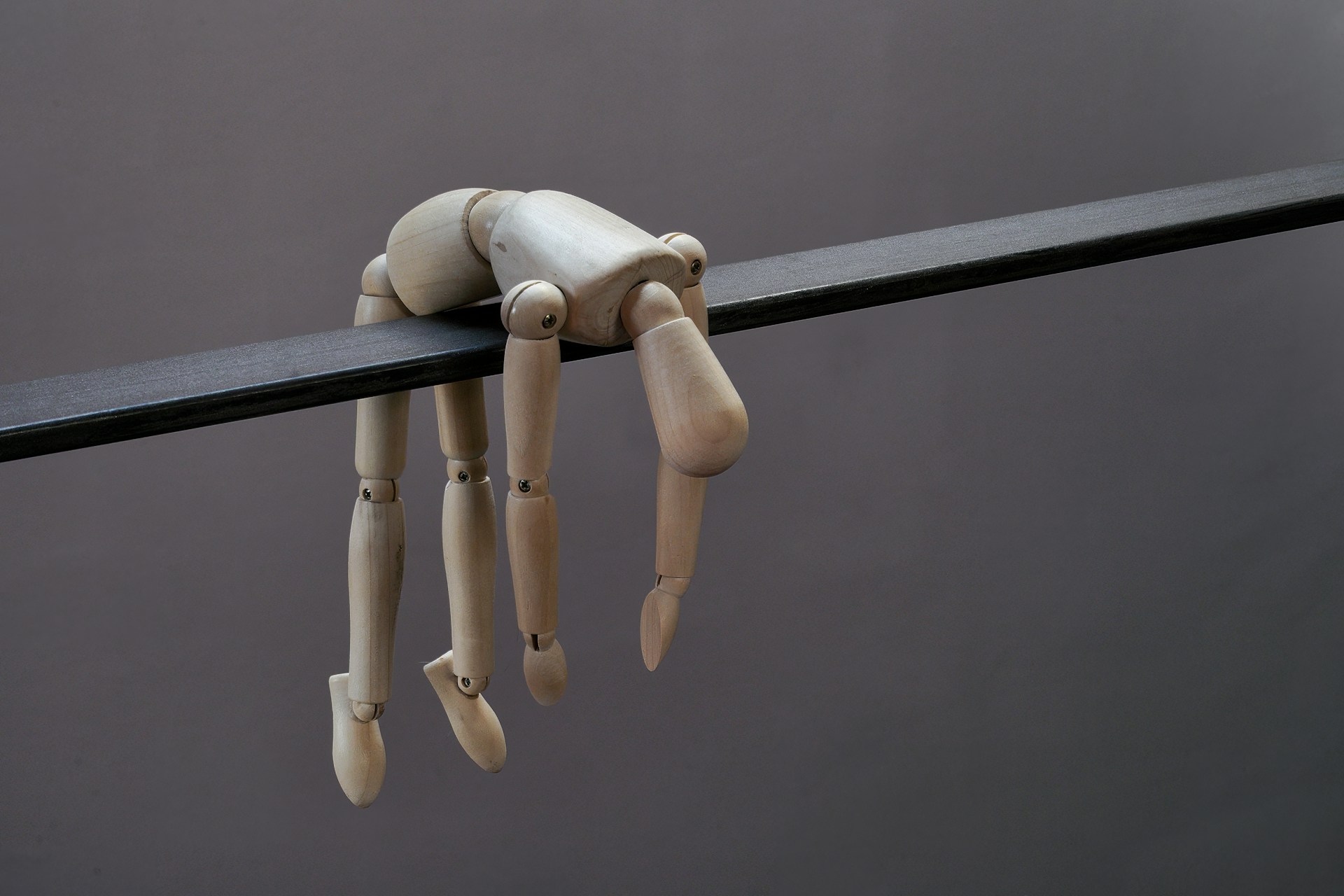
I almost feel like a steampunk replica of a human being. In the mental vision I have of my body, I see my insides as cogs and wheels that have stopped working, I seize up and stop moving, like the tinman in The Wizard of Oz. Only my machine won’t start again until I’m oiled up with morphine in liquid and Oxycodone in capsule-form.
Depending on how much is needed on any given morning, the shutters that are my eyelids are rolled up by a woman at the helm of tricks and whistles behind a curtain. Before my body can move, I have to stock take of which areas are the most pained, and therefore less functional. That’s when my scarecrow brain remembers I suffer from 21 chronic, degenerative illnesses that cover most areas of my central nervous and endocrine systems.
I do my best not to focus on the faults Fibromyalgia, Myalgic Encephalomyelitis and more have placed in my body. It’s restricted differently to the anomalies of my mind. Its low range of movement tries to make a coward out of me, by applying severe pain in a variety of simultaneous places, to the detriment of my joints, nerves, and resolve.
I move my legs with difficulty, there is intense pain every morning in my lower back, hips, and the entire length of my legs to the tips of my toes. Also stunted by numbness and paraesthesia (pins and needles x1000); I shuffle slowly to the edge. It can sometimes take me up to an hour to make it all the way out of bed if I don’t call on one of the carers with me for 1 and a quarter hours’ assistance.
My 24-hour care was cut by South West London Integrated Care Board at the end of 2024, not because I’m getting better – I could only wish – in actual fact, my health has decreased in the 10 years I was receiving NHS-funded care. To save money, they have now kicked me over to Social Services, who force my geriatric dad to pay 30% of my care bill from his pension, because I cannot afford it.
Back to my body though. My arms feel like they’re shattering as I attempt to use my excruciatingly painful elbow to prop me up. I try swinging myself in the pendulum style an extremely effective physiotherapist once taught me. Sometimes it works, others it’s way too painful, because of the swelling from my throbbing fingertips to my shoulders. Eventually, finally, with a great deal of pain, I manage to sit up, ready to undergo a similar ordeal to transfer to my wheelchair.
What should be a simple act of getting up requires a great deal of strength and power that I rarely feel in the morning, when I’m still battling an element of the condition I entitle, ‘night pains’. I try as hard as I can to get myself together for the start of my day, as my routine involves becoming halfway presentable and in front of my laptop by 08:00, when my first virtual write-along of the day begins with London Writer’s Salon.
Back in 2021, they taught me about Julia Cameron’s morning pages; three pages of stream of consciousness writing, where you essentially dump the mess and clutter in your brain to make way for the jewels of your mind to rise from the quagmire. I always start my writing day with them, but they’re difficult for two reasons.
Firstly, writing 3 pages freehand in 50 minutes, when you suffer with Osteoarthritis throughout the joints in your fingers, hands, and wrists, is no walk in the park, and that doesn’t take my other pain-related conditions into account. I have to ensure I have my painkillers over an hour before I even attempt it, otherwise there’s no way I can do it, and having to use the laptop, or even dictate a voicenote doesn’t have the same authentic feel.
It also feels very pressurised to record them, you feel you have to think and speak quickly and constantly, and when you secondly factor in brain fog, the cognitive confusion that comes with trying to record nuggets of gold while the timer is going, just messes me up mentally for the entire day, and results in severe headaches that make my entire face hurt (I also suffer from Temporomandibular Joint, the condition that causes severe pain in your jaw and connected muscles). So, despite those two hang ups, I push myself to write as much as I can.

More often than I can count, those 50 minutes pass, and I’m lucky if I have one page written, never mind three. But I will sit my bum in my chair and stay there until I’m done, because not only do I expel everything my anxious brain is overthinking, but somewhere in all that verbal vomit, those nuggets of gold actually do come tumbling out, and my therapy session is concluded for the day.
Brain fog is pretty prevalent for me throughout the day, but especially in the morning. Although the morning pages help me shape my thoughts and trim the fat, my thoughts still remain draped in confusion, forgotten facts, notes, and reminders (as well as on my laptop, there are post-it pads in every room in my flat – yes, even the bathroom – you’d be surprised where thoughts I need to capture come to me).
I can’t file any of the notebooks I’ve filled, because I’m forever referring to them for one thing or another; so, they flank one corner of my workstation.
London Writer’s Salon created The Cabin, a Zoom room where a core group of smashing (mainly) women and I meet throughout the day and write, along with a few other events they organise during the week. It’s because of them that I never feel alone in my #WritingCave. The quiet spaces not only encourage concentration but enable supportive accountability by having check-ins that monitor your progress and offer soft encouragement, or a sharp(ish) kick up the bum, according to whichever you need most at the start and end of the (work) week.
With Fibromyalgia, your state of well-being can alter within the hour, that’s how unstable, and unpredictable it is. It makes it nearly impossible to make plans of any kind. Deadlines are unrealistic, and time in general, is not the friend of a fibro sufferer (you should see how long it takes me to get ready for an appointment – even writing this article has taken me a week so far).
It took me 5 years to complete the first draft of my debut novel, because of many stops and starts – I lost one chapter 4 times and rewrote it 5 (honestly), but my health was most definitely a debilitating factor in that duration.

True, I don’t get out much – outdoor ventures always have a knock-on effect that tire me and enforce long periods of recovery. They have a knock-on effect on the rest of my physical being, leaving me no choice but to take time away from writing because I’m hazy from morphine stupors.
Once, on one such outing, my cab driver openly pitied me for not getting out to ‘day centres to pass the hours with strangers.’ I had to explain that I spend my days with a few hundred people many of whom I’ve come to know in a friendly capacity – I’m not starved for human contact! Maybe my methods are unconventional, but they work for me, and as long as that’s the case, why fix a good thing that isn’t broken?
When pain is prevalent (which is always in some degree, shape, or form), it can be very difficult for me to cope. I experience certain pains where, if I focus hard enough, take my painkillers on time, and force my attentions elsewhere, I can just about manage to write. The pain remains, but I have learned to shadow it with layers I can place over it, almost like layering in Photoshop.
At some point in the day however, I’m not going to be able to do that with ease, and during those times, not only can I not write, but I just want to be in peace. I want no-one staring at my tears, and I want nothing more than to lay down and sleep off the torture. Being in public would make that very uncomfortable for me, and I am still very self-conscious about being around others (despite it being 2026, with so many wheelchair-bound people in the world, you would be surprised at how many people still stare, as though I am a rolling TV screen).
Despite being in this condition for 12 years now, I still find it hard to communicate what I am feeling in terms of pain. I once counted different pains in 27 spots around my body. Fibromyalgia pain is not something that is easy to describe, and the different experiences can trigger brain fog, the confusion which can make it equally difficult to make what I am feeling understood by another person.
That difficulty can drive you to a place where you do not want to try explaining yourself to another; and being inadequately able to express the types of pain you are withstanding can make you feel a form of resentment, which can come across as you are difficult, instead of just being unhappy because you’re unable to clearly express yourself. That can lead to depression, which you are already experiencing, because of what the condition is doing to you, both physically and mentally.
.jpg)
Fibromyalgia also causes physical symptoms that make you feel extra levels of self-consciousness that you can really do nothing about. For instance, I suffer from severe oedema (swelling) in all of my limbs, caused by Lymphoedema which adds to the sensitivity I already experience.
My feet, in my opinion anyway, look deformed. I have a lot of open sores because I am Type II Diabetic, so I have to be in dressings applied by the District Nurses twice a week. Because of my limited range of movement, I suffer from a symptom called sedition, which means the water in my body is secreting back through my skin, causing painful, alligator-like scabs all-over my shins and calves.
My family and carers have tried to help me remove them however, they just return eventually. I am losing my hair, my nails are as thin as paper, and at 45 years old, I have developed cataracts. My vision is so terrible that I can barely see what’s right in front of me, never mind yards away and, worst of all, material against my hypersensitive skin is so painful, that often I cannot bear for any material to touch me (another reason being in public is not always a possibility).
Just as there is no cure for Fibromyalgia and Myalgic Encephalomyelitis (ME), there are no solutions to the 251+ symptoms which worsen over time. Despite this, there is very little help available for FibroWarriors in the UK. The United States and Australia are light years ahead of us in terms of research and implementation.
That is why I decided, after a hospital appointment with a particularly unsympathetic consultant who chose scaremongering as a method of treatment, to advocate for sufferers less able to fight for their rights and access to reasonable medical care. Despite first being cited in 1820s as Fibrositis, Fibromyalgia (renamed in 1976) and ME (first cited in 1934 as Akureyri Disease) are still relatively new to the medical community; so, as a result, many in the medical profession still do not recognise its existence.

As with many invisible illnesses, without the concrete evidence of a physical symptom, many in the medical profession dismiss what is known as the ‘Umbrella Illness’ (so known because it can affect so many other conditions in the human body, all coming under the heading) as little more than a Grande Malaise.
It’s the dismissal of the significance this condition bears on the life of a sufferer, that led me to take on the charge of spreading awareness of the condition throughout the UK. I took it upon myself to list a number of areas in which work could be done to further the knowledge of the condition in this country.
Although Fibromyalgia Action UK, the leading charity for the condition in the country, are doing tremendous work, they are still in dire need of help, and I have pledged my assistance for anything they need, with any help I can provide.
I am working on a Novella-in-Flash featuring 13 stories on 14 different, visible characters (as in lead, not overshadowed by ‘healthy people’), all connected, but from all walks of life, suffering with a variety of Fibromyalgia’s debilitating symptoms.
First diagnosed at 27, the consultant I saw, who had just come back to the UK after working on an American think tank on the illness recognised the symptoms in me immediately. He gave me 5-7 years before I ended up in a wheelchair, and his prediction was right – it was 7 years indeed. The degeneration of my conditions is inevitable, and the older I get, the harder it will be for me to overcome them and their side-effects; it’s not as though I can click my ruby-coloured heels 3 times and return to better health – I know that; but equally, I have no intention of giving into the demonic symptoms of the conditions I suffer with anytime soon, so it’s definitely not going to be a boring existence!
My hope for the future is that Fibromyalgia Action UK and their affiliates will be able to move knowledge and support forward in this country. I hope the British Medical Council will put the needs of FibroWarriors across the UK first, and remember that we need help, not further hindrance; if they really wanted to put the patient and their best interests first, they would open up the scope of painkillers available so there really would be, no place like home.