Blogs in the series
More to explore
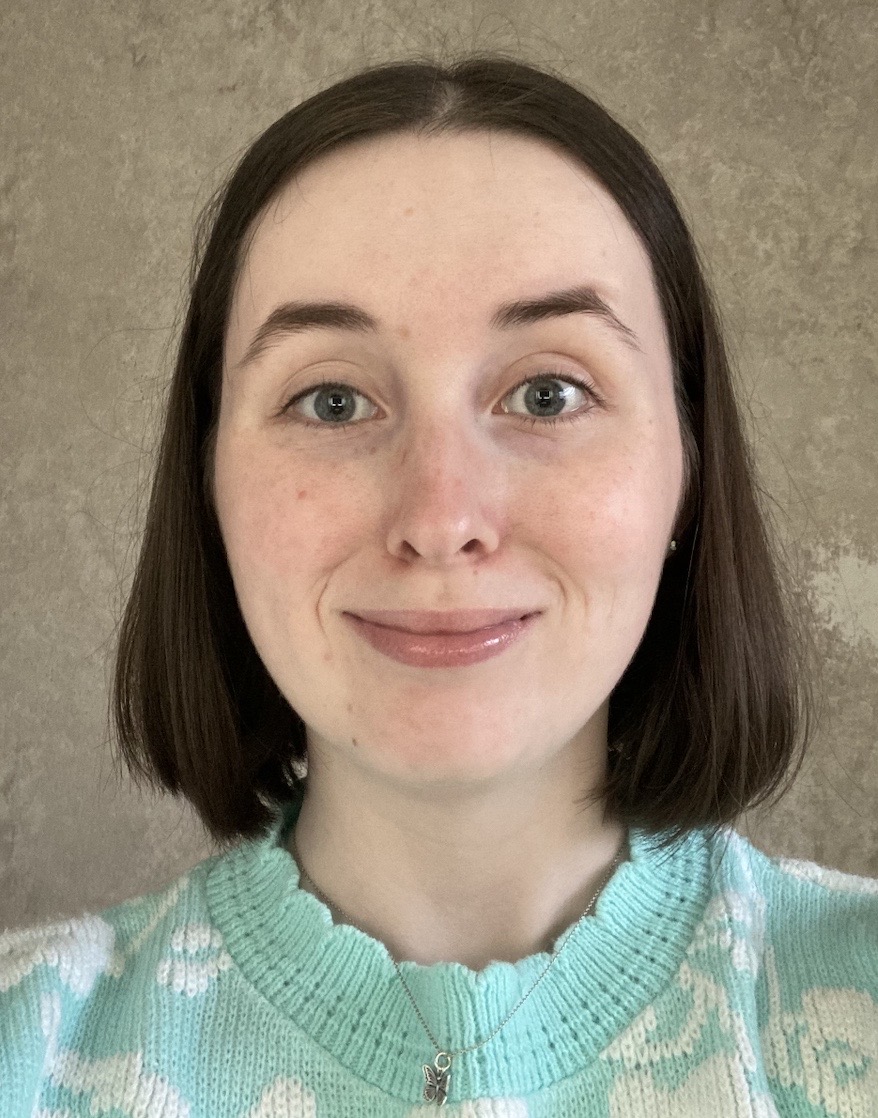
Eilidh McKenzie is an autistic author from Scotland, currently studying English Literature and Creative Writing with The Open University. As well as winning the New2theScene Winter Novel Competition 2026, she has also had short stories published in the anthologies for The Paul Cave Prize for Children's Literature 2024 and The Paul Cave Prize for Literature 2023.
She began writing her middle-grade mystery novel, Finding Calliope, when she was thirteen, and it has undergone many changes over the last decade. The most significant came after she was diagnosed with autism at fifteen, and she recognised for the first time the need for more autistic heroines in middle-grade fiction. Through her writing, Eilidh aims to shed light on the lesser-known experiences of young girls with autism, many of whom remain undiagnosed and completely unaware why they’re struggling to fit in a neurotypical world.
When she’s not writing, studying, or working, Eilidh can be found at a theatre, either sitting in the audience or volunteering backstage.
CHAPTER ONE
I have a routine that I follow every day.
It’s important to know exactly what to expect from a day before it begins. What would happen to the world if school buses arrived at random times, or if you never knew when your favourite TV programme was on, or if maths lessons lasted for however long the teachers felt like teaching? Structure and planning and familiarity are the only things keeping the world from descending into chaos. If I didn’t uphold that, who knows what would happen to me?
When you live in a hotel like I do, you notice patterns in the way people behave. Every Sunday, I sit at the same corner table of the Gull’s View restaurant, and watch a young family come in for the carvery. The children pile their plates high with food that they abandon halfway through to go play with the claw machine, and the mother lectures all of them about the importance of eating their vegetables — including her husband, who somehow manages to consume the mountain of food stacked on his own plate, as well as everything the children leave behind.
Why is it okay for them to do the same thing every week, but it’s strange when I do it?
Once I’m finished eating, I leave my dirty dishes behind and sneak through the staff door into the hidden corridor that acts as a shortcut from the restaurant to the reception area. The guests aren’t supposed to know this corridor exists. Technically, it’s just for employees, so I shouldn’t be using it either. But on Sundays, the restaurant swarms with people, and trying to get out is like fighting a battle.
I hate crowds. My routine is specifically designed to avoid them.
Luckily, the hidden corridor is always abandoned at this time, when everyone flocks to the restaurant to help deal with the customers. I never run into anybody back here.
The sound of whispering stops me in my tracks.
‘Callie’s turning thirteen on Saturday,’ says a voice that sounds suspiciously like my mum’s. ‘I think she’s old enough to learn about her birth parents.’
Before I can be spotted, I duck behind the plastic leaves of fake plants that line the dark, windowless corridor.
It’s never been a secret that I’m adopted — I don’t share my mum’s thick curls or my dad’s equally thick glasses that give him bug eyes — but I’ve never cared a bit about that. I was a tiny baby when they brought me home, and I don’t remember my birth parents or where I come from. Just because I share DNA with some random strangers I’ve never met doesn’t mean I have to pretend I want anything to do with them.
‘I don’t know, Abi,’ responds another voice, this time belonging to my dad. ‘Thirteen is still so young, and the news will only shock and upset her. I don’t think she’s ready to know the truth…’
His voice sounds nervous, and I want to leap out from my hiding place and yell ‘He’s right, I don’t want to know anything!’ But they can’t know I’ve been listening to their private conversation. Plus, I want to know why they’re talking about this.
I ask myself something I’ve never wondered before. Who are my birth parents?
‘She’s already too reclusive, Ben,’ my mum continues. ‘Maybe a big shock is just what she needs. That routine of hers is holding her back. She should be out having fun — real fun, not scheduled, like every other kid her age. She should have friends other than Luca. It’s not healthy that they rely on each other like that.’
My parents have expressed concern over my routine before, but never like this. They’re the ones who helped me make my routine in the first place. They should know routines are what prevent things going wrong, and that they make life better for autistic people like me. Why would they ever want me to change it?
It’s not like I have to follow my routine. It’s just that there’s no reason why I shouldn’t. I like the routine, and nothing in Shipton-on-Sea ever changes. Why would I adjust my life when everything is already perfect as it is?
‘You’re right,’ my dad concedes.
She is not right. I don’t rely too much on my routine. I don’t need any other friends but Luca. I don’t need to know who my birth parents are. I don’t need anything to change.
I need to get out of here before I hear something else that I don’t want to know.
Careful not to make a sound, I sneak out of the hidden corridor the way I came and back into the restaurant, risking the treacherous journey through crowds of customers, dodging families with toddling children, and weaving through waiters until I make it to the safe haven of the reception area. No one ever checks in so late on a Sunday. I shouldn’t run into anyone here.
Except the old man waiting at the front desk.
He looks exactly the way an old man is supposed to look. What little hair he has left is thin and white, combed over the top of his speckled head to make it appear like he has more of it than he really does. His frail body is wrapped in a ratty brown cardigan that’s clearly seen better days, and he’s hunched over so far, he looks like he’s about to snap in half. He’s wearing glasses too —the thin, delicate kind you only ever see grandads wear —and he’s squinting at the sign on the front desk that reads PLEASE RING THE BELL FOR ASSISTANCE in bold letters.
‘Are you waiting to check in?’ I ask him.
‘Aye,’ he replies in a Scottish accent. ‘Am I in the right place?’
‘Yes, but nobody’s here right now because they’re all helping in the restaurant. Nobody ever checks in so late. Why are you so late?’
There are two reasons why I can’t check him in myself. The first is because I’m only twelve which means I’m not old enough to look at the private information about guests on the computer, because it breaks confidentiality laws or something like that. The other is that sometimes I can be very rude to guests without meaning to, so it’s better to stay away from them completely, or else I could permanently damage the reputation of the hotel.
My parents try to point out all the different things I do that could accidentally make someone uncomfortable, but neurotypical people — that’s people who have the kind of brain society prefers — have so many nonsensical rules about social interaction that it’s impossible to keep up with them all. The main thing I’ve learned is not to ask questions, no matter how much you think you need to know the answer. Half the time it just gets me into trouble. But in this case, I think my question is harmless enough that it can’t possibly be wrong to ask it.
‘It was a bit of a last-minute decision to come here,’ the old man explains. ‘I had trouble finding a hotel to stay in so late in the season, but I spoke to a lady on the phone who said there was one room left available for me here.’
‘That was me,’ my mum says, appearing from the hidden corridor I would have come out of if I hadn’t run away. I take a step back, like my body is expecting her to yell at me for eavesdropping, before I remember she has no idea I was there. ‘Hi, I’m Abigail. Welcome to the Gull’s View, Mr Crockett. I’m sorry to have kept you waiting. I wasn’t expecting you to arrive until later.’
Mr Crockett gets his room key, and thanks my mum for her kindness in finding space for him. My body is itching to leave, but a tiny voice in the back of my head whispers that it might be impolite. Since I already spoke to the old man, do I have to wait until there’s a long enough pause in the conversation between him and my mum to say goodbye?
‘Can you show him to the lift, Callie?’ my mum whispers, as Mr Crockett struggles to drag his suitcase across the carpeted floor. ‘I need to get back to the restaurant.’
Reminding myself that humans can’t smell guilt, I nod and lead him around the corner to the lift, carrying his suitcase (which is lighter than I expected) because that’s the correct thing to do. Once he’s been safely escorted to his room, I can finally get back to schedule.
The old man’s late check in was a change in my routine, but it’s not big enough to be worried about.
CHAPTER TWO
At ten minutes past nine on Monday morning, I leave the Gull’s View and walk down the seafront until I get to the spot where my cousin Luca and I always meet. We call it Gambler’s Corner because it has three amusement arcades next to each other, sandwiched between a tattoo parlour and the café where we get lunch on Tuesdays.
Luca was supposed to be here five minutes ago. His bus has already been and gone, speeding through a puddle and splashing me on its way past, but he never got off. I check my phone for the tenth time, but there’s still nothing. No missed phone calls. No missed messages. And no sign of Luca.
I leave another string of texts.
Where are you?
Are you ok?
Why aren’t you here?
He doesn’t respond.
I try not to panic, but it’s hard not to when I’m imagining all the horrible things that might have caused Luca’s disappearance. What if he fell on his way to the bus stop and bumped his head, and he’s unconscious in a ditch somewhere unable to call for help? What if a serial killer happened to be walking past and saw him lying there, defenceless and unprotected, and decided he would be their next victim? What if I never see my cousin alive again?
I won’t jump to conclusions. I’ll wait for three more minutes, and if I still haven’t heard from him, then I’ll call the police.
Waves crash violently against the shore, and my stomach churns in unison. I distract myself by looking in the window of the tattoo parlour. When I turn eighteen, I’m going to get a tattoo of a butterfly, one that looks like the exhibits in the Butterfly Garden, my favourite place in the whole world. I could get a red lacewing, the poisonous butterfly whose fiery colour warns predators not to come after them; or a zebra swallowtail, named after the black and white stripes on its wings; or even an Amazon beauty, the butterfly that eats rotten fruit.
‘I am so sorry I’m late,’ Luca apologises as he comes running down the street nine minutes behind schedule. He’s tied his hoodie tight around his head to keep out the rain, but the few strands of his hair protruding are soaking wet.
Since I look nothing like either of my adoptive parents, Luca is the family member I most closely resemble. Our hair is the same shade of blond, though his is straight and mine is stuck somewhere between wavy and frizzy, which is more usually described as ‘a mess’. My eyes are the same shade of blue as the sea, and his are the colour of the seaweed that gets washed on the beach, but I suppose from far enough away nobody would notice that difference. We’re even the same height — though Luca is a few months older. Sometimes, strangers think we’re twins, but we’re not biologically related.
Now that he’s here, I let out a sigh, and my brain cancels the emergency procedures.
‘It’s fine,’ I tell him, even though it didn’t feel like it was.
‘The cat threw up on the sofa again,’ he explains. ‘Stupid thing keeps trying to eat the diffuser. I had to watch Libby while my dad cleaned it up. Then I missed the bus, but I didn’t want to keep you waiting, so I ran here instead.’
I like Luca’s cat a lot more than he does. His name is Domino, but Luca only ever refers to him as ‘the cat’ or ‘stupid thing’. These days he doesn’t have enough energy to do more than laze around the house or curl up against baby Libby while she’s napping. But when he was a kitten, he had a habit of escaping and once ran all the way down to the seafront before we found him. He’s been obsessed with anything ocean-scented, like the diffuser in their bathroom, ever since.
‘You could have phoned me,’ I say. ‘I would have waited for you to get another bus. You didn’t need to run all the way here.’
Luca considers this for a moment. I tried to word it in a way that makes it sound like I’m sparing him the effort, but really, it would be better for us both. That way neither of us would need to panic.
‘That would have been a better idea,’ he concludes. ‘Sorry.’
Our Monday morning routine starts eleven minutes late, but I try not to mind, even though imagining all the terrible things that might have happened to Luca has made me tired and we’re not going to be able to win as many tickets as we might have if he had been on schedule.
To most people, the three amusement arcades on Gambler’s Corner look identical. Some of them might not even notice they’re different arcades at all, since the flashing lights and electronic music blend into one huge building. But when you’re here as often as Luca and I, you come to learn all their unique differences.
The first arcade is The Ruby Slippers, which is the easiest place to win tickets, since the ball drop machine is sort of broken and if you rattle it hard enough you can hit the jackpot every time. But the prizes are terrible, so it’s hardly worth the effort it takes to figure that out.
Next is Leprechaun’s Gold. The prizes are better, but most of the big-ticket machines don’t work so it’s impossible to win them. Plus, my dad is convinced I once caught a disease from their carpets.
The Blue Ballroom is the superior arcade of the trio. It’s definitely cleaner than Leprechaun’s Gold, and there are enough cups to carry your change in, unlike The Ruby Slippers. The best part is, there are tons of two-player games that Luca and I can play together and double our ticket winnings in half the time.
The game over screen flashes in front of us when Luca accidentally shoots me instead of the enemy in Alien Invasion 3. It’s not our favourite, but we’re trying to get to the top of the leaderboard in every game in the arcade.
‘Do you have any change left?’ Luca asks as I fold the tickets that are rolling out the slot, counting them in my head as I go.
‘No, I’m all out.’ I sigh. This is what happens when the Butterfly Garden gift shop has a sale. ‘Should we check the floor for coins?’
‘Maybe we should…’ he trails off, noticing something on the far side of the arcade. ‘Go.’
Turning to see what’s distracted Luca, four boys wearing black puffer coats are huddled around one of the penny machines.
I know those boys. They’re in the year above us at school, and collectively known as the Courtyard Crew — named after the place they hang out when they skip lessons. I don’t know their names, but what I do know is last year they bullied Luca. A lot.
The tallest boy spots us, nudges his friends, and then shouts something I can’t make out over the arcade music. Luca is standing very, very still beside me, like if he doesn’t move a muscle, they might think he’s a statue and walk away.
‘What did he say?’ I ask.
‘Nothing,’ he answers quickly. ‘It’s not important.’
Luca fiddles with the hem of his t-shirt like he always does when he’s nervous.
‘Are they bullying you again?’
He immediately drops his t-shirt and shakes his head. ‘No, of course not. I told you, that stopped months ago.’
‘You could be lying.’
‘Well, I’m not. It’s fine. I’m fine. I promise.’
Deciding not to question him further, I follow Luca out of the arcade, away from the Courtyard Crew. Just because I’m not very good at reading people’s body language doesn’t mean I don’t know my cousin. If Luca says he’s fine, then he must be. He would have no reason to pretend otherwise.