Blogs in the series
More to explore
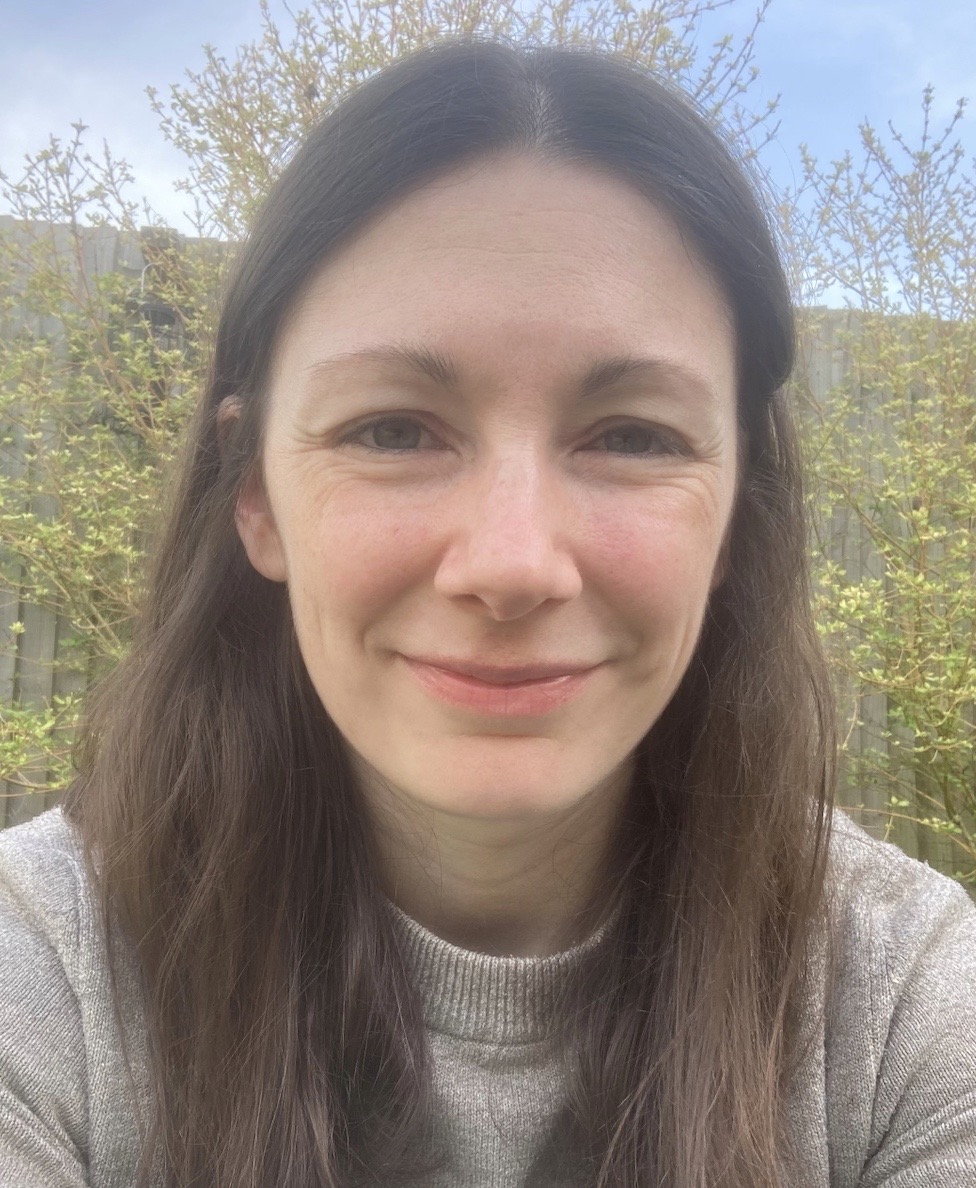
Vicky Ellaway-Barnard is a short story writer and novelist from Cambridgeshire, where she lives with her husband, toddler and antisocial cat. She had an epiphany aged roughly fourteen that she wanted to be a travel writer, and somehow that sent her down the path of becoming a Geography teacher.
After teaching at a secondary school in Hertfordshire for five years, she shifted sectors and worked at a national youth charity, moving from operations into strategy. Rather than taking the logical next step and managing the charity’s business delivery, though, she decided to have a child, completely upend her world and take a career break to manage fictional worlds instead.
So far, most of her work has featured spiky, unlikeable or somehow unhinged women, and she’s pretty sure that’s got nothing to do with growing up a consummate people pleaser. As well as an array of ‘weird’ short stories, Vicky has also written two relatively normal novels and is now working on her third with the support of an Arts Council grant.
You can find her at vickyellawaybarnard.com or on Instagram @vickyellawaybarnard.
Silverfish
(Explicit Language)
I’m on my hands and knees, scrubbing piss stains from around the base of the toilet. Yet again, it was the only job Darren had to do and, yet again, he played with the kids until ten minutes before his family were due to arrive, and only then decided to go for a shower. If he knew what I was doing now he’d say something like why bother, they won’t notice anyway. And I’d agree, both to appease him and because he’s right. But that won’t stop me having high standards. Well, not even high standards. Just I-don’t-want-piss-on-the-floor-level standards.
I shift the bin to the side, trying to reach around the back of the toilet, and that’s when the silverfish darts across the tiles. I recoil — too fast — and whack my elbow against the door frame.
“Fucking fuck fuck—” I’m whispering so the kids don’t hear, even though there’s little chance of that — they’re busy racing around the garden in the snow.
The silverfish has frozen on its way to the skirting board. Silver Fish. My old nickname. At that point I didn’t know it was an insect; it was just what they called me.
I peer in closer. Two antennae emerge from its head, three come off the other end in a T-shaped tail. It’s silvery-grey, its back a blend of shimmering scales, making it merge with the tiles, just a ridge in the slate. The slate that Darren insisted would be hard-wearing and aesthetically-dominant which, fair play, it is. But it also sucks the heat from my hands, my knees. Maybe he’d have chosen differently if he’d ever scrubbed a toilet.
I shouldn’t be the one down here. At the beginning it was all we’ll get a cleaner, I’ll look after you. Only that volleyball career of his never did take off, did it? It’s hard to tell now what came first — the paunch or the betrayal of promises made.
I duck my head to blow gently on the silverfish and it whisks away, disappearing through a crack in the skirting board.
Sign of damp. My mother, sniffing, glancing sideways at me. She’s not actually here, of course. I’ve made a point of not seeing her since marrying Darren, or rather she’s made a point of not seeing me. She always did think I was stuck up — she’d laugh if she could see me now, nose practically in the piss stains. Or maybe she’d roll her eyes at the lengths I’ll go to perform a better life.
Sign of damp. The first time my mother said that, I thought she was trying to make a joke. So I laughed. It was after the county trials — most of my swimming club had been there, trying out for a place on the team. I raced against girls two or three years older than me — their shoulders broad, their legs long. By comparison, I was small, compact, and much faster than they expected. When my head broke the surface of the water, I was already halfway down the pool, cheered on by my club. Silver Fish! Silver Fish! I reached the end of the lane and tucked and rolled, twisting under the water to push off again. I hurled my limbs back down the pool and grabbed hold of the side more than a second before the girl in the next lane. Silver Fish! I pulled myself out of the water, droplets sliding down my trademark light grey costume, and that’s when I looked up and saw her watching me from the balcony. She didn’t say anything until we were back in the car and nearly home. First she asked me what the county team training schedule was, and how much driving she’d have to do. And then she looked sideways at me and said it. Silverfish. Sign of damp. And I’d laughed until I realised she wasn’t.
The front door opens, a squeaking sound, and I glance back at the crack where the silverfish has disappeared. It’s enviable, really. How it just leaves, no fucks given about anyone else.
I straighten and step into the hallway, bright smile at the ready. It’s always irritated me how Darren’s family just let themselves in. Irritated me more that they’re such affable people. They make strangers feel like long lost family — the old man queueing behind them to get into the stadium, the girl behind the bar, the woman using the hand dryer at the Toby Carvery down the road. Naturally I wasn’t there, just heard all about these people on their return. Really they could talk to anyone. Just not me.
Perhaps I should be pleased that they feel so at ease here. They’ve never wanted the formality, the performance of a door being opened. Of being granted permission to come in. And why should they? They’re the kind of people who can make a home anywhere.
“Yvette, you’re right there.” Darren’s mother kicks off her shoes, her laces languishing in a puddle of melted snow. “Biting cold outside, isn’t it?” And then, when I don’t reply — because it isn’t really a question — “Guess you want…?” And I’m handed a coat and a scarf as she walks past me into the lounge.
“Hello, Yvette.” Darren’s father shrugs off his coat and drops it on top.
“Here you go.” Darren’s sister slings hers on too, and holds out a couple of carrier bags. “Things my lads have grown out of.” I shift the coats over one arm, and take the bags with the other. I am a woman who has strong arms. I am a woman who does not need charity. I read somewhere that you’re supposed to choose affirmations that speak to your core, but I tend to just go with whatever I need in the moment. It keeps me looking ahead, moving forward. Makes me better.
In the early days when Darren was training, he would stick notes around the house. Twenty press ups. Forty lunge jumps. And when he came across them he’d do it. But that stopped a year later when he didn’t make pro and had to get a desk job. Silly really. Because that was when he needed the notes the most. Anyway, I guess that’s why my affirmations have lasted. Because they move with me.
Behind Darren’s sister are her two teenage sons. Wordlessly they drop two more bags at my feet and follow everyone else.
And then Darren deigns to come downstairs. It occurs to me to mention the silverfish. Sign of damp. Tell him that his family have traipsed in the snow, that we should stop the children from bringing in their wet things, that we should crank the heating up, dry out the house.
He eyes the coats and the bags. Smiles. Claps me on the arm and walks into the lounge.
Tosser. He used to think I was a catch, used to treat me like the best thing that ever happened to him. Because I was. Am. I’m the one who settled. I’m the one who agreed to marry Darren, his mother and mine going way back. I’m the one who thought I could help him make it, become the sports star I couldn’t. I threw myself behind him, and he’s the one who gave up.
Normally at this point I’d set my face and dutifully hang up the coats. But not today. Today I’m annoyed that we have a silverfish problem. That we have damp and it’s another thing I’ll have to sort out because I’m the one who manages everything. That seeing the silverfish has made me think about swimming and it’s easier not to remember how much better my life was then. Easier not to think about how much more I should be. Plus, the piss stains.
So I drop everything on the hallway floor. Someone else can pick it up if they’re bothered by the mess. It’s the tiniest act of defiance, but it feels good.
The front door swings open again and my youngest comes running through. Before I can tell him off for leaving the back garden he’s shouting his excuses at me.
“—Not my fault! He shut the gate and—”
I bend, holding him to me, thinking he’s upset.
“Mum—Ow! Your jumper scratched me.” He pushes away from me holding his wrist and runs into the lounge, small puddles of water left behind by his boots.
For fuck’s sake. Another thing to clean up.
I stand, running my hands down the front of my jumper. Still shop-soft. But the back is covered in hundreds of tiny silver sequins, and their light dances across the walls as I twist to see them in the hallway mirror. I hadn’t remembered this being the design but I love it. I am a woman who scrubs piss stains in sequins.
When I eventually grew too old for the swimming club, they bought me a silver sequined swimsuit as a leaving gift. It fractured the water as I cut through, slicing my way up and down the lane for the last time. They hoped I’d come back as a coach, and I did for a while. Until the sequins dulled with the chlorine and some of them came loose, the little strings hanging restless. My mother had always said the swimsuit was frivolous, had refused to help me wash it, and so it fell apart.
She never believed I’d make it, thought it was just a childhood hobby, and was relieved when my swimming career petered out before it had even begun. Maybe that’s why Darren held such promise at the beginning, why I supported everything he did. Why I stopped coaching and switched my attention to volleyball, to motherhood, to giving him the glittering life I’d once imagined for myself.
But what’s the use in dwelling?
I leave the wet footprints — as if anyone will even notice anyway — and instead move onto the next task. I pull things from the fridge, piling up trays with cheese, crackers, grapes.
In the lounge, Darren’s family laze across the sofas watching the football. To anyone else they might look perfectly content. But to me, they’re wasted potential.
I slide the trays onto the coffee table in front of them, and my boys immediately reach forward.
Darren’s mother looks over. “Yvette, love. This one,” she elbows Darren’s father, “skipped breakfast. Any chance you’ve got anything more… substantial?”
I look back, trying to gauge what she means.
“Bacon rolls, maybe? Something meaty. These are growing boys, after all.”
Ah, there it is. The usual dig.
“Or crisps? Just bring crisps for now and we can go out to eat after the game.”
My boys look at me eagerly. “Can we actually? Can we get burgers?”
“Well—”
“Yes,” continues Darren’s mother, as if I wasn’t starting to speak. “You look a bit peaky yourself, Yvette. A bit grey round the edges. Some beef would bring the colour back to your face.”
I look to Darren for support, for an apology, for any recognition of the conversation that’s happening around him. The beef comment felt pointed. As pointed as the bone that stuck out of the beef shank we had at our wedding, the shank I ate my way around because vegetarian is not a word Darren’s family understands. Darren’s father ended up doing a speech — my mother didn’t want to — which was all about the traditional domestic life Darren loved. How after training he loved nothing more than a roast, and how he hoped I’d keep that alive for his son. I smiled politely because of course I wouldn’t, but there was no point in causing a stir on my wedding day.
Darren doesn’t respond. He’s all eyes on the match.
And fine, fuck it. If they want crisps and football and burgers then far be it from me to get in the way, to try to elevate their afternoon. Even watching a bit of volleyball would be less tacky. I’ll take away the trays and eat it all myself. I am a woman who does not need to please.
But back in the kitchen, the cheese is unappetising, the brie beginning to puddle on the board and the stilton too pungent. I pick at some spilled cracker crumbs, dotting my finger across the countertop to collect them. They’re not hitting the spot.
From the corner of my eye I see the recipe book, still open on the cake I made earlier. That’s more like it.
I pick up the book and pull on the binding, prising up the hard cover to reveal the starchy glue beneath. And then I lick it. It’s bland with a slightly bitter undertone, and there’s a whiff of piss about it too. I gnaw on the edge of the book, scraping the glue from the spine.
If I wasn’t weeks away from the twelve-month menopause milestone then I’d wonder if I was pregnant. With my eldest I didn’t crave anything, just went off coffee. With my second it was orange juice and anything acidic. I’m not used to actually craving something — it’s an animal desire, a primal longing for whatever’s in this glue.
A fantasy dances through my head. Me hiding away. Nesting. That’s what the pregnancy literature called it. And at this point who cares that I’m not, that I no longer can. My family would cope without me — I’d keep an eye on them all, of course, but I’d only come out when I wanted to. Or just when I was hungry. There’s a power that comes with the thought: I am a woman who no longer ovulates.
My youngest swings into the kitchen. “Mum, have you got the crisps?” He eyes the recipe book. “Or cake? Is there cake?”
“Later, yes.” I put the book on the table, not bothering to flatten down the ripped spine. I’m the only one who bakes. “You get the crisps. I’ll get the bowl.”
“Mum — we don’t need a bowl.”
“You do,” I say, reaching into the corner cupboard.
“Oh God, you’re not putting on a show, are you?” This is my eldest, slouching in. He grabs the bag of crisps from my youngest’s hands and rips it open.
“Hey!”
“Get your own.” He munches and ignores his brother’s protests. “We’re too old for talent shows, you know. No one will go along with it. Like, what are you even supposed to be? An ant?”
“Maybe a beetle!” My youngest has perked up now that there’s an opportunity to buddy up against me.
“What? I’m not—”
But my youngest has already run off, shouting in a sing-song voice. “Mum’s a beetle! Mum’s a beetle! She’s going to do a song about beeee-tles!”
I call after him, but I’m drowned out by a roar from the football. In a way, thank God. They don’t need to think I’m more of a try-hard than they already do. Long gone are the days when I got the boys — the nephews included — to dress up, act out little skits, or perform songs for the rest of the family. I was the only one who seemed to care, who wanted to do something other than watch sodding football.
My eldest smirks and slopes off back to the lounge. “Bye, beetle.”
Frowning, I look in the mirror. I’ll admit my face is looking a little greyer than usual, but that’s probably just the lighting. My hair has fluffed up too, like it used to when I entered the changing rooms before swimming. It was a struggle to squash it all down under my cap. Sign of damp. I part my hair around two new protrusions, two lumps that stick out on either side of my head. Some of my hair is stuck to them, winding upwards and splaying out like tiny antennae. I look less like a beetle and more like—
“Mum — beetle’s don’t have tails!” My youngest, who had stuck his head back round the kitchen door, cackles and dashes away again.
I twist, feeling behind me. From my lower back protrudes something hard and sticking out in three directions. It makes me think of the large BBQ fork, but bent out of shape. One of the boys must have hooked it on the back of my skirt, trying to wind me up; I wiggle it but it won’t come loose.
In the next room, I can hear my youngest squealing about the show I’m going to put on, and my husband finally responding to him, asking what on earth he means. That yes, the boys are too old for a talent show. And no, they don’t need to perform just to please me. That they can just chill and watch the game.
I hear them all laugh, hear Darren’s father say something about what the hell kind of prissy woman did you even marry and Darren’s sister chip in with she’s always thought she’s too good for us. And now they’ve gone and said it out loud, put into words how ridiculous they really think I am. I would have carried on, wanting more, wanting better, but accepting that this is what I’ve got. That Darren and the rest of his family — even my own sons — don’t want me to help improve them. Are just happy the way they are. If only they hadn’t said it out loud, then maybe I could have gone on living in my head, telling myself I was being too much, expecting too much by always wanting more. But no. They’ve said it out loud. They’ve said it out loud, and they sound just like my mother.
So do you know what? I’m done.
“Alright, alright.” This is Darren. “I’ll go see what she’s up to — put a stop to any silliness.”
I stand still, my back to the kitchen door, my dark skirt blending in with the slate floor, my silver sequined jumper merging with the walls, the countertops. I hear his footsteps approach, pause in the kitchen doorway. I’m so still he doesn’t notice me.
“Yvette? This isn’t part of the act, is it?”
No, it’s not. I am a woman who wants more — who has always wanted more.
He turns, frowning, looking round the kitchen. “Yvette? Where’ve you gone?”
I’m right here, but you don’t see me. Have never seen me. I am a woman who deserves more.
“Ugh. Never mind.” And as quick as that, he goes back into the lounge. Barely even tries.
I watch him go in the mirror, and then my antennae twitch. I cut across the slate tiles. Tuck and roll, slice my way through the remains of a puddle, hurl myself across the kitchen. I dart away behind the skirting board and I’m gone. I am a woman who won’t wait for others to change.